The first sign that something unusual has happened in this quiet lakeshore village is not the sound of fishers pushing their wooden boats into the waters of Lake Malawi, or children running barefoot through the dusty paths.
It is the sudden arrival of strangers who are not strangers at all.
In M’namba Village, in Salima District, life has begun to stir around families returning from South Africa—carrying stories of fear, survival and loss.
The village remains much as it has always been: rows of mud-brick houses with uneven floors, walls weathered by years of rain and sun, and doors hanging loosely on worn hinges. Poverty is visible everywhere.
But some homes are receiving unexpected visitors. “It is the people returning from South Africa,” says Ahamadi Asani, 33, himself a recent returnee.
Asani counts about 15 neighbours from M’namba who have either already returned or are waiting to come home after fleeing what they describe as escalating xenophobic violence in South Africa. “They are coming back with nothing,” he says.
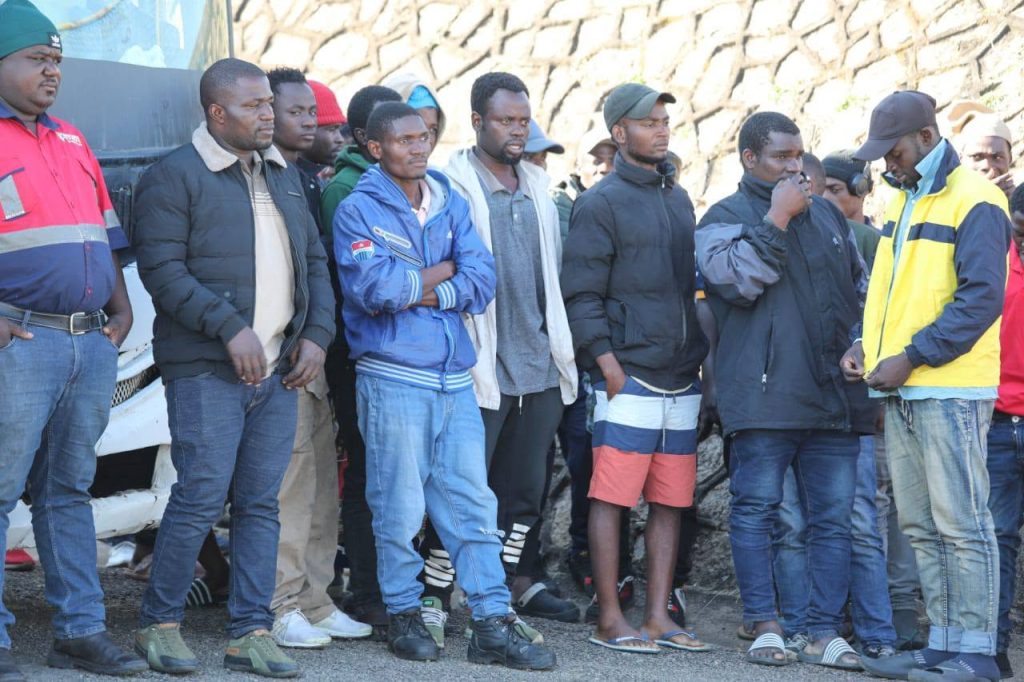
For many of them, the journey home was supposed to represent defeat. Instead, it became a desperate escape.
Asani left Malawi on February 22 2025, driven by the same dream that has pushed thousands of Malawians across borders for decades: finding work, earning money and creating a better future for their families.
At home, opportunities were scarce. He hoped South Africa would provide the financial stability he could not find in Malawi.
“When I left Malawi, I wanted to find better opportunities, start a business and become financially independent,” he says.
But the dream quickly collided with reality. After arriving in South Africa, Asani spent four months moving from place to place searching for employment.
“I struggled to find work. During that time, I survived because relatives and well-wishers helped me with food and accommodation.”
Eventually, he found employment at a shop owned by an Ethiopian in Pietermaritzburg, where he worked for eight months.
The salary was modest, but it transformed his life. “I was able to pay rent, support relatives back home and pay school fees for my children,” he says.
Then fear arrived. As xenophobic tensions intensified, Asani says foreign nationals began living in constant anxiety.
For more than three weeks, he rarely left the house.
“We were hiding inside our homes because we feared for our lives,” he says.
The violence eventually reached his doorstep.
A group of South Africans attacked the compound where he lived, breaking down doors and assaulting residents.
“There was a small back door where I managed to escape with one of my friends,” he says.
Two Malawian neighbours were killed in the attack, he says, while two others suffered serious injuries. “It was one of the most painful and traumatic experiences I have ever witnessed.”
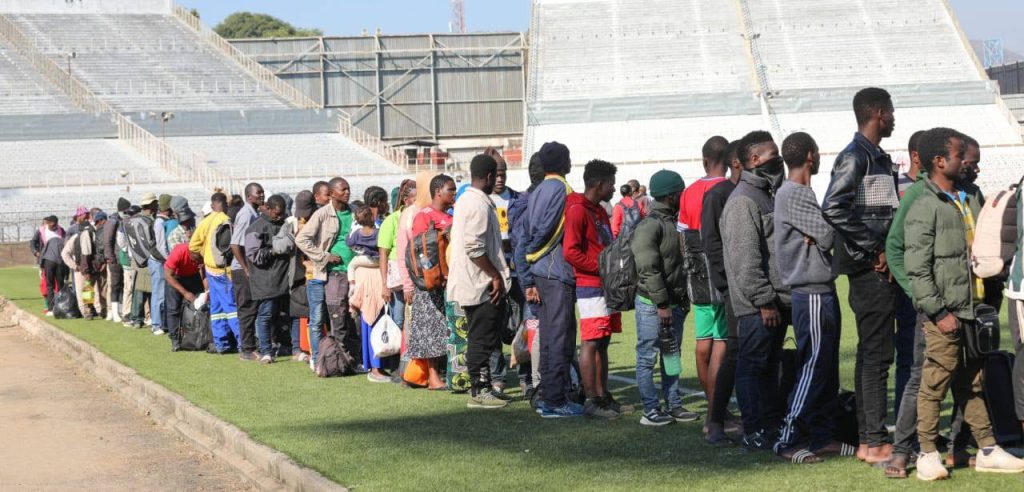
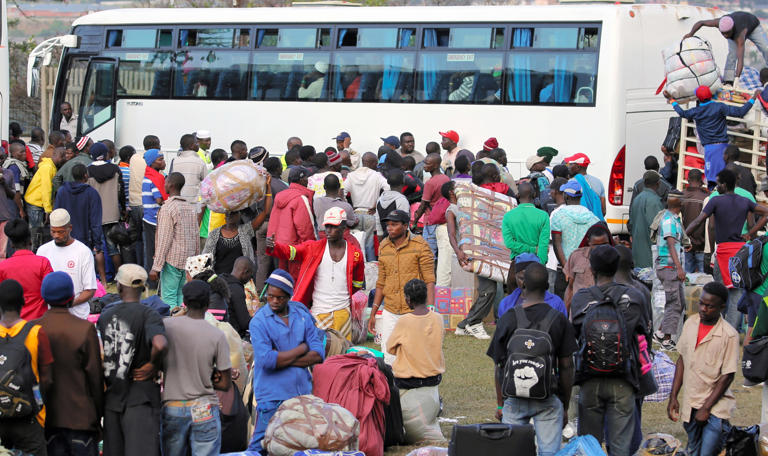
After escaping, Asani made his way to a camp where hundreds of Malawians had gathered while waiting for assistance to return home.
The refuge offered safety, but little comfort.
“There were no mattresses, no blankets, no mats. We were sleeping on the ground,” he says.
Sanitation was poor, food was limited and many people were living in desperate conditions. “We had children there, including street children. It was not easy.”
Eventually, Asani became one of the Malawians transported home through a repatriation programme supported by the Malawi government.
But returning home did not mean returning to security.
It meant returning to uncertainty. “We came back with nothing,” he says.
Today, Asani is unemployed and struggling to support his wife and two children.
“Everything requires money, but I have no source of income.”
The memories of South Africa still haunt him. “Sometimes I feel hopeless and I do not know what the future holds,” he says.
Despite his struggles, he has made one bold decision: “I will never go back to South Africa, even if peace returns.
“What I experienced was beyond anything I imagined. I would rather struggle here than go back and face those horrors again.”
For Hawa Troko, 32, the journey home was also a journey away from danger.
With her eight-month-old baby strapped to her back, Troko fled South Africa after hearing reports of attacks against foreign nationals.
She left behind her husband, an artisan, and escaped with only what she could carry.
“I heard that some people were being attacked, their property was being looted and some were even being killed,” she says.
Troko had moved to Durban three years earlier to join her husband, hoping they could build a better life and support their three children back home.
Instead, she found herself living in a camp for five days before securing a place on a Malawi government bus.
When she finally arrived in Salima, she returned to the same problems she had hoped South Africa would solve: hunger, unemployment and poverty. She received K100 000 in transport assistance to reach her village.
Now, she must rebuild her life.
For Twaibu Hussein, 31, leaving South Africa ended a decade-long chapter.
The Chenchongwe villager had lived in Durban North for 10 years, working as a tailor, furniture-maker and ceiling board installer.
He had visited South Africa repeatedly and built a livelihood there.
But this year, he says, the atmosphere changed dramatically. “Xenophobia has become a big challenge,” he says. “People were saying they wanted foreigners to leave because they wanted to fix their country.”
Hussein says some employers initially tried to protect foreign workers, but pressure increased.
“Even police officers were coming to workplaces and taking people to the camps. It showed that foreigners were no longer wanted.”
He says thousands gathered at camps waiting for transport home.
“At first there were around 10 000 people. By the time I left, there were about 15 000.”
Getting onto a bus was not easy. “It was a miracle when you finally got a ticket,” he says.
He describes disputes among desperate returnees competing for limited spaces in the buses.
“People were fighting because everyone wanted to be among those leaving first.”
The journey home was equally difficult. “We went without food. We stayed without bathing. Some people collapsed on the way.”
At the border, returnees underwent immigration processing and medical checks before receiving food, water and assistance to travel to their districts.
Hussein arrived back in Malawi on June 29 after leaving South Africa on June 16.
Unlike Asani, Hussein believes returning home could create a new opportunity.
He does not plan to return to South Africa. Instead, he wants to use the skills he gained abroad. “There are business opportunities in Malawi,” he says.
He hopes to start buying and selling agricultural commodities such as rice, maize and beans, while continuing his furniture and construction-related work.
“I want to open my own shop and focus on building something here.”
For many returnees, that is the difficult question now facing them: how to rebuild in a country they left because they could not find enough opportunities.
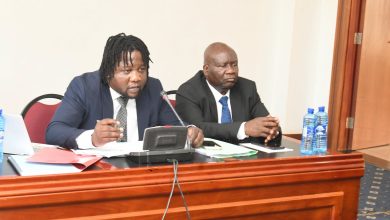
Department for Disaster Management Affairs (Dodma) commissioner Wilson Moleni told reporters last Friday that the repatriation exercise has so far consumed K7 billion from both government and partners.
“Around K2 billion has come from our partners, and K5 billion from Malawi Government, making it a total of K7 billion that has been spent on the exercise to date,” he said.